Ranch Life: Animal Farm Sim
- 0.0
- Rating
- 1.00M
- Installs
- Free
- Price
 Analysis by App-foxy
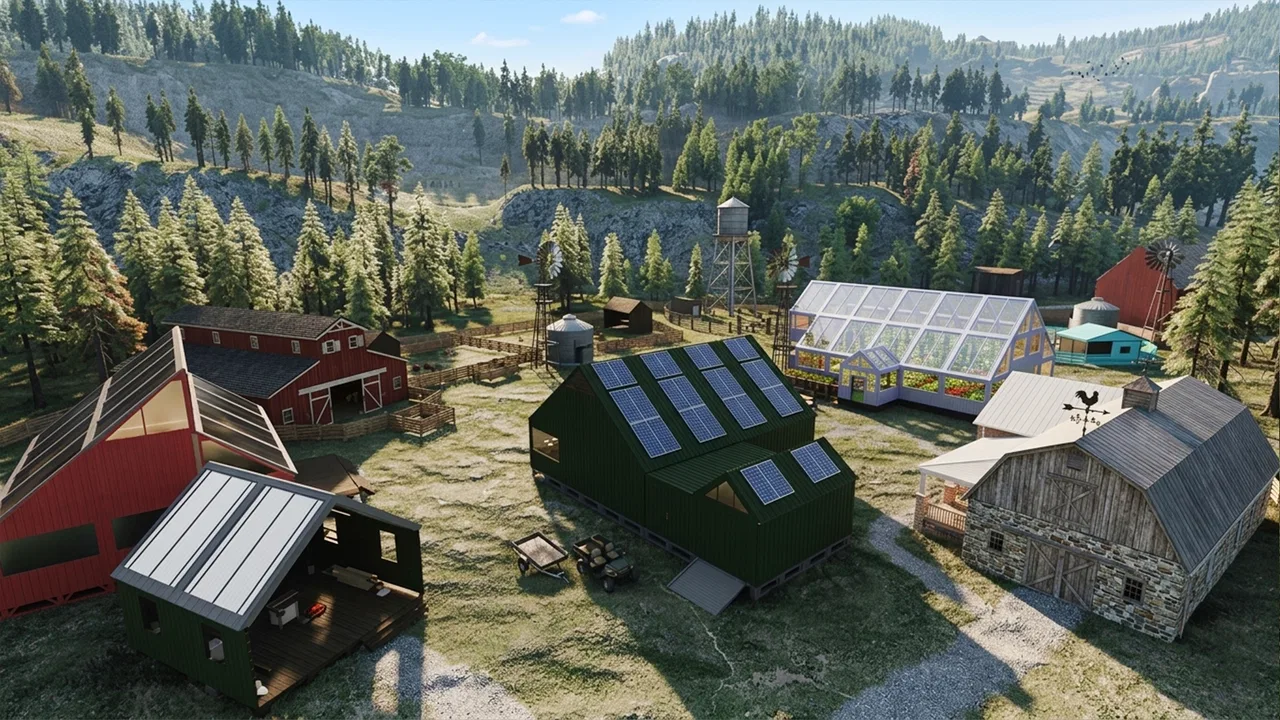
Ranch Life: Animal Farm Sim is the kind of mobile adventure game I would put on a shared household device when everyone wants something calm, approachable, and easy to understand. Its central idea is simple: develop a ranch, look after animals, and gradually turn a modest farm into a place that feels like your own. I found that appeal strongest in short sessions, when I wanted a gentle activity rather than a demanding action game or a complicated management simulator.
The game comes from Apex Bound Studio Private Limited and is free to download. It has passed the million-install mark, which makes it a familiar choice in the mobile farming space, but popularity alone does not make it suitable for every player. The important question is whether you enjoy steady progress, repeated care tasks, and the satisfaction of improving a place over time. If you prefer constant surprises, deep strategy, or a story-led adventure, this may feel too restrained.
How the ranch works in everyday play
My first impression was that the ranch provides a clear reason to keep returning. Rather than asking me to master a complicated control scheme, the experience is built around observing what needs attention and deciding what to do next. Animals, land, and improvements all contribute to the feeling that the property is gradually becoming more productive and more personal.
You May Also Like

 Blood Strike: 2.5 Anniversary
Blood Strike’s Loadouts Turn Every Drop Into a Tactical Gamble
A close look at Blood Strike’s custom loadouts: how fast access to signature weapons reshapes its battle royale rhythm, rewards preparation, and narrows the gap between fights.

 Pandora - Music & Podcasts
Pandora’s Music Is Easy to Start, but Harder to Recover
Pandora’s strength is its low-effort path from a seed to a station. Its weak spot is how much confidence it asks you to place in connection, setup, and quiet recovery.

 8 Ball Pool
 Is Built on Rivalries, Rematches, and Routine
A close look at the rivalries, rematches, shared routines, and unanswered safety questions that turn a quick pool match into a persistent mobile community.

 Samsung Music
’s Quiet Strength Is Playing What You Already Own
Its reach comes less from spectacle than from dependable access to a personal library. That simplicity is both the app’s strongest retention engine and its ceiling.

 AccuWeather: Weather Radar
AccuWeather Review: A Quick, Clear Forecast for Everyday Decisions
For everyday plans, the best forecast is the one you can understand quickly. AccuWeather makes rain timing, radar, and local conditions easy to act on, with a few trade-offs.

 Hill Climb Racing
Why Hill Climb Racing Still Turns Crashes Into One More Run
A tiny car, a bumpy hill and one more upgrade: Hill Climb Racing keeps resurfacing because its simple chaos makes every near-miss feel personal.
More From Our News Desk



That makes it especially comfortable on a phone or tablet used by several people. One person can spend a few minutes tending the ranch, while another can continue later without needing to understand a long chain of controls. The game’s adventure label is worth keeping in mind, though: this is not an adventure built around fast combat or cinematic exploration. Its sense of adventure comes from expanding the farm routine and seeing what the next stage of ranch life brings.
A realistic household example would be a parent using the game during a short break, then handing the device to a teenager who wants to check the animals or make the next improvement. That kind of handoff works best when players agree on a simple rule: the person opening the game should first inspect what is already in progress before making major changes. In a shared environment, that small habit prevents accidental decisions from becoming a source of frustration.
I also like that the ranch gives players a visible sense of ownership. Even when the individual actions are familiar from other farming games, the combined result is easy to understand. You are not merely clearing menus; you are shaping a place. That visual and practical connection is what gives the routine its charm.
What makes the routine satisfying
The strongest part of the design is the relationship between care and progress. Looking after animals feels meaningful because it supports the wider ranch rather than existing as an isolated activity. Improvements, in turn, make the property feel more capable. I found myself thinking in small priorities: what deserves attention now, what can wait, and which change will make the next visit more useful?
That is also where the game differs from a purely decorative farm title. A decoration-focused alternative may let you arrange an attractive scene but offer less reason to return beyond appearance. A more demanding management game may provide deeper systems but require more concentration than I want from a mobile session. Ranch Life sits between those approaches. It offers a sense of management without presenting itself as a spreadsheet, while still giving the ranch a personal visual identity.
One useful approach is to treat each visit as a short work cycle. I recommend checking the animals first, then looking at the next improvement, and only after that spending time on optional tidying or customization. This order reduces the chance of using resources on something attractive but less useful. It also gives a shared-device player a clear stopping point: finish the immediate care tasks, review the next goal, and leave the ranch ready for the next person.
Shared devices need clear boundaries
The biggest practical issue in a household is not the farming itself; it is ownership of decisions. A ranch can feel personal, so two players may have different ideas about how it should develop. One person may want efficient growth, while another may care more about making the property look welcoming. Neither approach is wrong, but mixing them without discussion can make the game feel less enjoyable.
I would decide before playing whether the ranch belongs to one main player or whether it is a genuinely shared project. If it is shared, agree on a few boundaries: who chooses major upgrades, whether anyone may spend premium currency, and whether cosmetic changes need approval. These are not game settings; they are household agreements, and they matter because the game includes optional purchases priced from $1.99 to $3.99 per item.
That purchase range makes the game free to start, but not entirely free from spending decisions. On a personal device, I can treat optional purchases as my own choice. On a family tablet, the situation is different. I would not let a younger player make purchase decisions casually, and I would keep any payment process under the account holder’s control. The game can remain a pleasant shared activity if everyone understands that free access and optional spending are separate things.
Another helpful boundary is session length. Farming games can encourage “one more task” thinking, especially when a new improvement is close. For adults, that may be harmless. For children or younger teenagers, a household routine works better when play ends at a predictable point. I found that stopping after a completed care cycle or a clearly finished upgrade feels less abrupt than quitting halfway through an activity.
Coordination without turning play into homework
Coordination should stay light. I would not create a detailed rota for a relaxing ranch game, but a quick note about the next priority can help. For example, one player can leave the ranch after identifying the next improvement, while the next player checks whether that goal still makes sense before committing resources. This keeps the project coherent without removing the freedom to make personal choices.
A useful shared method is to divide responsibilities by interest rather than by strict time. One person may enjoy animal care, another may prefer planning improvements, and a third may like shaping the appearance of the ranch. This gives each player a reason to return while reducing competition over the same task. It also makes the game a better fit for households where people have different attention spans.
There is a trade-off here. Shared play can make the ranch feel like a collaborative project, but it can also dilute the feeling of personal progress. If one player wants a private long-term save and another wants a communal space, a single shared ranch may not satisfy both. In that situation, I would choose individual play rather than expecting the game to solve the account or profile arrangement for us.
This is one area where a more structured alternative may be better. Some farming games are designed around separate profiles, stronger multiplayer coordination, or clearly divided progression. Ranch Life is more appealing when the household is comfortable with informal cooperation. It is less suitable when every player needs an independent history, independent goals, or strict control over changes.
Age, trust, and the Teen rating
The game carries a Teen content rating, so I would not treat it as an automatic choice for young children simply because the setting involves animals and farming. The gentle ranch theme may look family-friendly at first glance, but the age label should guide the household decision. Parents and guardians should consider the individual child, the device arrangement, and whether the player understands optional spending before allowing access.
For a teenager, the game can work well as a low-pressure activity between schoolwork and other responsibilities. The goals are easy to explain, and the ranch gives progress a visible shape. I would still establish trust around purchases and shared changes. A Teen rating does not replace parental judgement, and it does not tell me how a particular child will respond to recurring goals or in-app offers.
For younger children, I would be more cautious. The question is not only whether they can understand the controls. It is whether they can use the game responsibly on a device linked to an adult’s account. If the answer is uncertain, I would keep play supervised and avoid treating the ranch as an unsupervised activity.
On a shared device, age context also affects the choice of play style. An adult might enjoy optimizing the ranch, while a teenager may prefer making visible changes and checking animals. Giving each player a defined role can help, but I would avoid presenting the game as an educational tool unless the child’s experience genuinely supports that goal. Its main strength is entertainment through routine, not formal learning.
Performance expectations and practical fit
The current version is 1.9, and the game supports devices running Android 7.1 or later. That makes it accessible to many older Android devices, although compatibility on paper is not the same as identical performance everywhere. A household using an older phone should leave enough storage and close unrelated apps if the game feels sluggish. I would also test it on the actual shared device before promising it to several players.
Because it is a mobile ranch simulator, the best fit is a device that is comfortable to hold and has a screen large enough for checking the property without constant tapping mistakes. A small phone can still work, but a tablet may be more pleasant for shared viewing. The larger display makes it easier for another person to follow along when deciding what should happen next.
One practical tip is to avoid beginning a major ranch decision when the device is about to be handed to someone else. Finish the immediate action, look over the result, and then stop. This sounds minor, but it prevents the next player from inheriting an unclear situation. In a solo setup, I can experiment freely; in a shared setup, a clean handoff matters more than squeezing in one last change.
The game is free, which lowers the barrier to trying it. Still, free entry does not mean every household will experience it in the same way. Players who are comfortable ignoring optional purchases can approach it as a relaxed simulator. Players who feel pressured by paid shortcuts may prefer a premium farming game with a single upfront cost, even if that alternative has a smaller initial audience or fewer ongoing incentives.
Where it beats other farming choices
Compared with a farming game centered on combat, Ranch Life is easier to recommend for someone who wants animals and property development without making danger the main attraction. Compared with a highly detailed agricultural simulator, it is likely to feel more approachable because the ranch fantasy is easier to grasp than a full technical production chain. I enjoyed that middle ground when I wanted progress without a manual.
It also has an advantage over purely idle farm games: the ranch feels more connected to my decisions. An idle alternative may be better for someone who wants to check in briefly and let progress happen with minimal involvement. Here, the satisfaction comes from paying attention and choosing what deserves care. If you want the game to play itself, this is probably not the strongest match.
On the other hand, players seeking a rich narrative, social competition, or deep customization may outgrow it. The ranch concept is inviting, but the appeal depends on enjoying repetition with a purpose. I would choose a story-heavy adventure for characters and plot, a strategy simulator for complex optimization, or a multiplayer farm for structured cooperation. This game is better when the ranch itself is the destination.
My most useful advanced habit is to separate progress decisions from appearance decisions. I first make sure the ranch can support its next practical step, then spend time on the visual details that make it feel personal. This prevents the common mistake of making the property look finished while leaving the underlying routine inconvenient. It is a small distinction, but it makes longer play sessions feel more deliberate.
Who should try it, and who should skip it
I would recommend it to players who like animal care, gradual expansion, and a calm adventure structure. It is a good candidate for a teenager or adult who wants something approachable on Android, especially when the device may be used by more than one person and the household can agree on spending boundaries.
I would also recommend it to someone new to farming games who wants to understand the appeal before committing to a more complicated simulator. The ranch provides a friendly starting point, and the free download means trying the basic experience does not require an upfront purchase.
I would skip it if I wanted a game with a strong plot, rapid action, or completely separate household profiles. I would also think twice if recurring tasks feel tiring rather than relaxing. The same routine that gives the ranch its comfort can become repetitive for players who need constant novelty. Anyone uncomfortable with optional in-app purchases should involve the account owner from the beginning or choose a game with a clearer one-time payment model.
Another reason to skip it is if the household cannot agree on who controls the ranch. A shared save is only enjoyable when players trust one another. If every upgrade is likely to become an argument, individual games or a title with formal multiplayer roles would be a better choice than forcing cooperation here.
My household verdict
After looking at it as both a personal game and a shared-device option, I see Ranch Life: Animal Farm Sim as a pleasant middle-ground ranch experience. It is free to begin, supports a broad range of Android devices from version 7.1 onward, and gives animal care and property growth a clear purpose. The developer, Apex Bound Studio Private Limited, has chosen a familiar theme, but the value comes from how comfortably that theme fits short, repeatable sessions.
The game works best when the household treats the ranch as a cooperative space with simple rules. Decide who can make major changes, keep optional spending under the account holder’s control, and respect the Teen rating when choosing who plays. Those steps are more important than trying to make every session identical.
My final advice is to try it if you enjoy calm progress and can accept a little repetition. Start by focusing on practical ranch improvements, use animal care as the anchor for each session, and save decorative decisions for moments when the shared plan is clear. If you want a private, story-rich, or highly strategic experience, another category of game will serve you better. For a household looking for a friendly ranch project that can be picked up and put down, though, this is an easy one to consider.
FAQs for Ranch Life: Animal Farm Sim
01What is Ranch Life: Animal Farm Sim about?
Ranch Life: Animal Farm Sim is a casual farming and animal-management game where you build and develop your own countryside ranch. You can care for animals, collect resources, grow crops, expand facilities, and complete different tasks to improve your farm. The game is designed for relaxed, accessible gameplay, making it suitable for players who enjoy simulation, decorating, and gradual progress.
02Which animals and farming activities are available in Ranch Life: Animal Farm Sim?
The game focuses on raising and caring for farm animals while managing the daily activities of your ranch. Depending on your progress, you can feed animals, collect useful products, grow crops, process resources, and use your earnings to unlock improvements. The variety of responsibilities gives the game more depth than simply planting crops, although the exact content may vary with updates and device version.
03Can Ranch Life: Animal Farm Sim be played offline?
Some parts of Ranch Life: Animal Farm Sim may remain accessible without a constant internet connection, particularly basic farm-management activities. However, online access can still be required for advertisements, cloud saving, special events, purchases, or certain game features. Before relying on offline play, it is best to test the game after installation, since requirements can change through updates or differ between Android and iOS.
04Is Ranch Life: Animal Farm Sim free to download and play?
Ranch Life: Animal Farm Sim is generally available as a free download, but it may include optional in-app purchases and advertising. These purchases can sometimes speed up construction, provide extra resources, or unlock convenience features, while normal progress is usually possible through regular play. Parents should review purchase settings, especially if children use the device, because prices and available offers may vary by region.
05Is Ranch Life: Animal Farm Sim suitable for children and casual players?
The game is a good choice for casual players who prefer colorful, low-pressure simulation gameplay rather than fast action or complex controls. Its tasks are generally easy to understand, and the gradual ranch-building system encourages short play sessions. Nevertheless, users should check the listed age rating, advertising, privacy information, and in-app purchase options before allowing younger children to download and play it.
Pros
- Relaxing farm gameplay with a charming rural setting.
- Wide variety of animals to raise and care for.
- Simple controls make it accessible for casual players.
- Progression gives you new goals as your farm develops.
- Suitable for short play sessions throughout the day.
Cons
- Some upgrades and expansions may require considerable waiting.
- The gameplay can become repetitive after extended sessions.
- Energy or resource limits may slow down farm activities.
- Frequent tasks may feel grindy without optional purchases.
- Performance can vary on older phones or tablets.

Ranch Life: Animal Farm Sim
Gallery